
Lost in Translation: Why Local Insight Matters More Than Ever [Effective Communication #4]
Lost in Translation: Why Local Insight Matters More Than Ever [Effective Communication #4]
June 25, 2025
![Lost in Translation: Why Local Insight Matters More Than Ever [Effective Communication #4]](https://priority.net.my/wp-content/uploads/2025/11/Lost-in-Translation-Why-Local-Insight-Matters-More-Than-Ever-Effective-Communication-4-1024x650.webp)
In our last article, we explored how Gen X is often left out of today’s messaging strategies. This time, we’re zooming in on another gap – what happens when a message is perfectly crafted, but still misses the mark because it doesn’t quite fit the cultural context.
Not long ago, our team was asked to support the local rollout of a global campaign. The materials came from HQ – beautifully designed, messaging on-brand, and seemingly ready to go. But as we prepared to localise the content for our market, something didn’t feel quite right.
There, in the centre of the key visual, was an element that could easily raise questions in Malaysia. In the market it came from, it was completely harmless. But here, it could be misinterpreted – not maliciously, but through a cultural lens shaped by faith, tradition, and deeply rooted sensitivities. We flagged it immediately. After some discussion, the visual was adjusted for Malaysia. The campaign launched smoothly. And to most people, it looked seamless.
That near-miss was a clear reminder, not because there was any fault in the creative, but because it highlighted something we don’t talk about enough: localisation is about more than just translation. Sometimes, the words are perfect, but the message still gets lost.
The Layers Beneath a Message
As communications professionals, we tend to focus on written messaging. But in reality, communication happens on many layers: tone, timing, context, even imagery. And in a multicultural market like Malaysia, what works for one group might feel out of place for another, let alone across countries.
The truth is, global messaging is often built with good intentions. But it’s usually created through a specific lens – one shaped by the culture, values, and norms of the HQ market. That doesn’t make the message wrong. It just means it’s not complete yet.
We sometimes hear, “This worked well elsewhere, let’s just roll it out as is”. But direct amplification isn’t communication. And assuming something will resonate equally across markets can be a costly mistake. We’ve seen it happen: a visual that was meant to be playful lands as tone-deaf. A tagline that sounds powerful in one language reads flat in another. In many of these cases, nothing was technically wrong, but something still didn’t sit right.
That “something” is where local insight comes in.
PR as Interpretation, Not Just Execution
Our role, especially in PR, is often described as messengers. But in reality? We’re more like interpreters. We interpret intent, audience, tone, and social context. We don’t just help brands decide what message to send, but also identify how it’ll be received. That means we’re not just translating text – we’re translating meaning. Sometimes, we’re translating emotion.
In that earlier case, the adjustment was minor. Nothing about the core message changed. But the change showed respect for the local audience, and that respect is what earns trust. It’s also what makes a campaign feel like it was made for the audience, not just delivered to them.
In today’s media landscape, where attention is short and sentiment spreads fast, relevance is everything. But relevance doesn’t come from cleverness. It comes from understanding. Understanding what your audience values. What they expect. What builds trust, and what might quietly push them away.
Start With the Audience, Not Just the Message
Localisation isn’t about compromise. It’s about clarity. And the brands that get it right aren’t the ones who say “one message fits all.” They’re the ones who say, “Here’s the message – now how do we tell it in a way that matters here?”.
At Priority, we often remind ourselves that effective communication starts not with what we want to say, but with what the audience needs to hear – and how they need to hear it. That mindset has helped us guide many global brands in navigating this space: keeping the core of their global message, while making it resonate more deeply with local audiences.
Because when something gets lost in translation, it’s not always the words that go missing. Often times, it’s the connection.
And in communications, connection is everything.
Have you ever had to localise something that didn’t quite fit at first? What’s your approach when walking that fine line between brand consistency and local cultural nuance? We’d love to hear how others tackle this – let’s exchange notes!

March 4, 2025
More Than Words: Why Stories Make PR Campaigns Stick [Effective Communication #2]
What if we told you that killing off your brand mascot could be a genius PR move? That’s exactly what…
READ INSIGHTS
January 22, 2025
Why Clear Messaging Wins [Effective Communication #1]
Imagine walking into a trendy cafe. The menu boasts coffee blends like 'Dreamer’s Symphony' and 'Aurora Bliss', but instead of…
READ INSIGHTS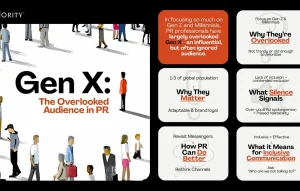
April 23, 2025
Mind the X-Factor: The Generation We’re Not Talking To [Effective Communication #3]
There is a lot of talk about tailoring messages for Gen Z and Millennials – adapting tones and platforms to…
READ INSIGHTS